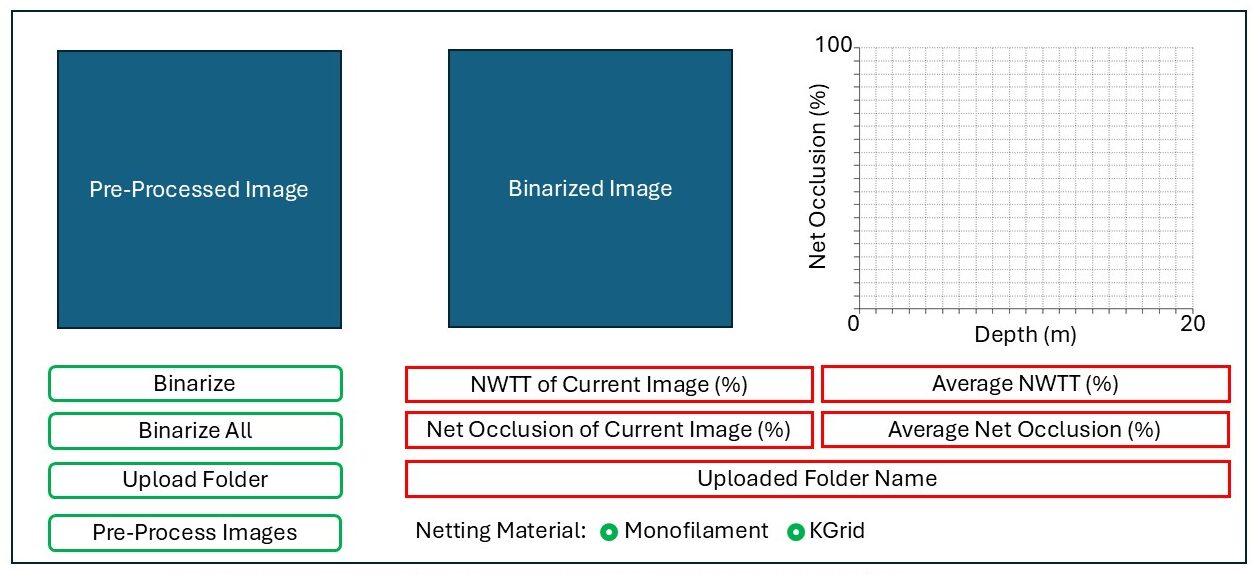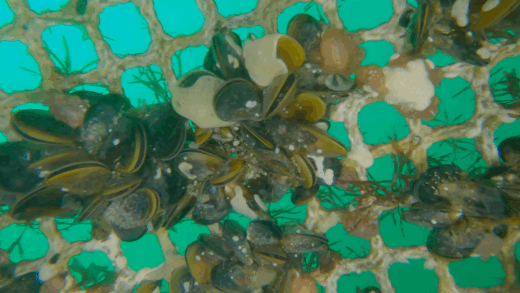
A new study, led by Robin Cappaert (IMAS/UTAS PhD student), has developed an innovative AI-based tool to automatically assess net occlusion in salmon aquaculture pens. The research forms part of Robin’s PhD project and focuses on improving the way marine biofouling (organisms that grow on underwater surfaces) is monitored and managed.
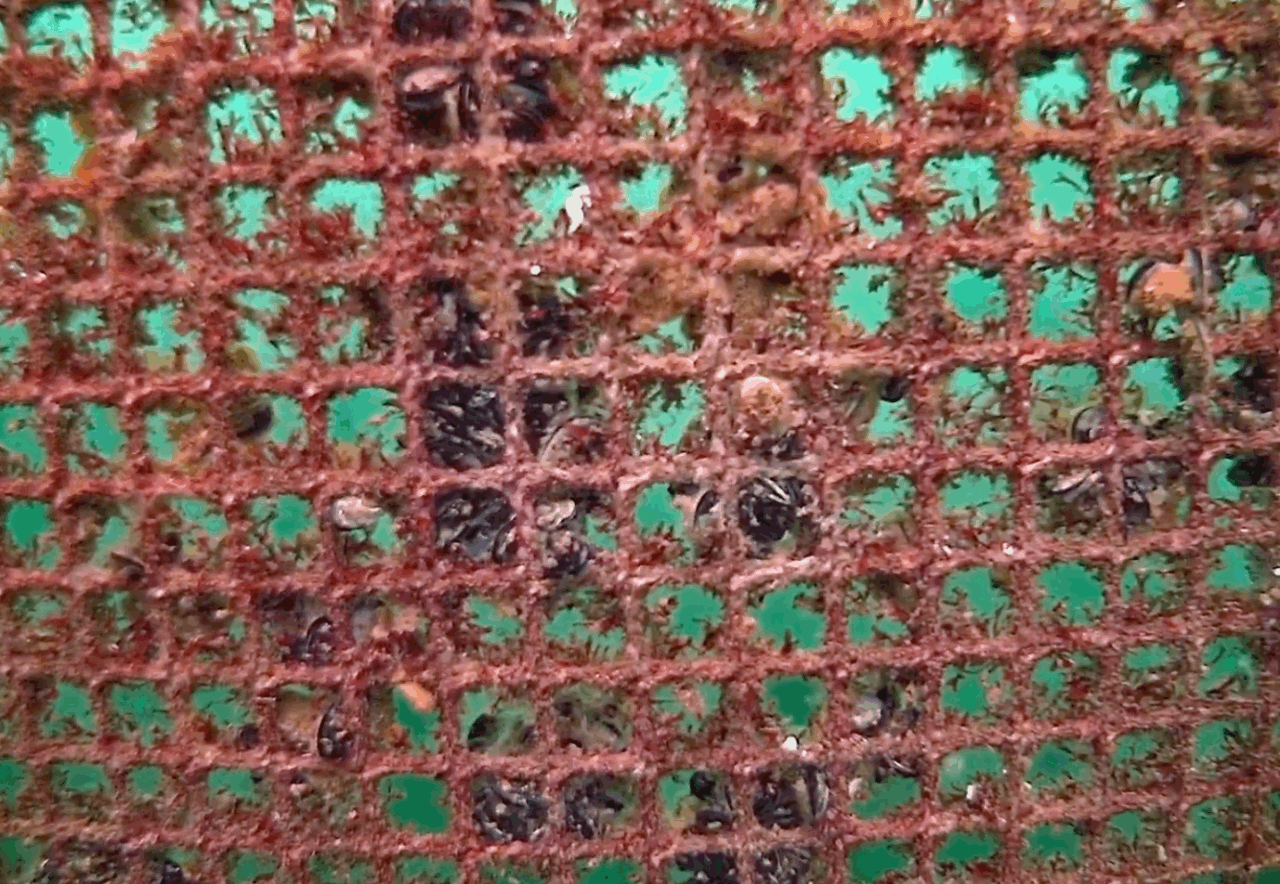
The tool uses deep learning models (ResNet-18 within DeepLabv3+) to analyse underwater camera images and distinguish between water and non-water areas, achieving 96.4 % validation accuracy and 93.5 % mean test accuracy. Packaged as a user-friendly desktop application, it processes batches of images, applies correction factors for different net types, and calculates net occlusion percentages across depths.
By providing consistent and repeatable measurements of net fouling, the tool can help farmers optimise cleaning schedules, reduce operational costs, and maintain healthy water flow within pens.
For more information, please read the full article here.